Malorie and Tom’s relationship
Bird BoxMalorie and Tom’s relationship is formed under pressure by shelter, grief, and shared responsibility. Tom first makes room for the pregnant Malorie in the house, then becomes someone with whom she can recognize and bear loss. His presence eventually anchors the household’s decisions; after he is gone, his example remains a source of hope as Malorie carries on along the river.
Shelter and the First Offer of Care
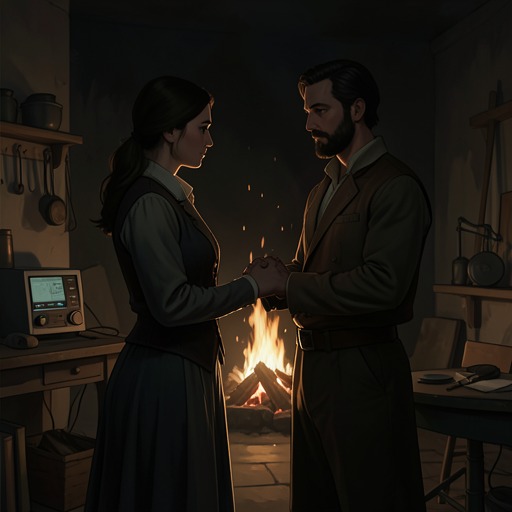
When Malorie arrives at the house, she tells Tom that her sister, Shannon, had been with her and is now dead, adding that she left her. Tom responds not by asking her to explain further but by offering practical refuge: he proposes showing her the house, gives her the bedroom at the top of the stairs, and says he will sleep downstairs. Malorie refuses to take a room from anyone else, but Tom insists. He explains that Cheryl sleeps at the end of the hall and Felix in the room beside the one intended for Malorie, and emphasizes that the household will help because she is pregnant.
The offer establishes a relationship based on concrete care rather than easy reassurance. Tom makes space for Malorie within an already shared home and frames that accommodation as a collective responsibility. Her pregnancy, her bereavement, and the question of where she can safely sleep are present together from the outset; his answer is to make room for her and promise help.
Shared Grief and Witness
The bond deepens when Tom gently acknowledges that Malorie has lost her sister. He tells her that he is sorry, then reveals that he, too, has lost a child. He describes finding his eight-year-old daughter in the bathtub, her wrists cut with the razor she had watched him use to shave. The water was red, and blood had spilled over the tub’s edge and onto the walls. Tom cannot know whether she had looked outside or had chosen to die without seeing the creatures; that unanswered question remains part of the loss he shares with Malorie.
Malorie reaches for Tom and holds him. The gesture is an act of witness: she does not resolve the uncertainty or try to explain his daughter’s death, but offers physical comfort. Tom does not cry. After a moment, he turns to the shelves and begins marking the paper, while Malorie thinks of Shannon, who also died in a bathroom and also took her own life. The parallel between their bereavements connects them without making their losses identical; each recognizes in the other a grief whose decisive circumstances cannot be fully known.
Shared Decisions and Tom’s Importance
The relationship also develops through decisions that expose how much the household depends on Tom. When the residents confront the danger of the water and the lack of medicine, Tom argues that the river offers no safe alternative: they could become seriously ill, have no medicine, and cannot assume another well would be uncontaminated. Malorie watches the others yield to the practical force of his reasoning. Don’s visible resistance gives way to concern, while Olympia’s fear turns to guilt. Malorie herself does not want Tom to take the risk, but recognizes, for the first time since arriving, how integral he is to everything that happens in the house.
Her response is not simply to defer to him. Tom’s willingness to act inspires her, and she helps him while also proposing a safer alternative to the cellar: if he went mad there, he could destroy their food supplies. Their exchange shows a bond built through participation in a shared burden. Tom’s judgment shapes the group’s choices, but Malorie contributes her own practical assessment rather than remaining only the recipient of his care.
His Influence Beyond the House
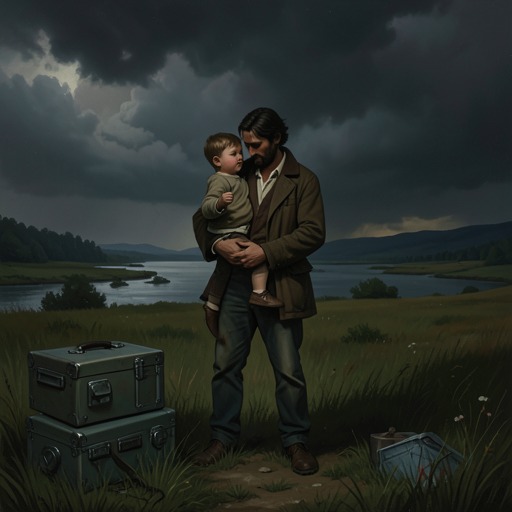
After the household is left behind, Tom’s influence reaches Malorie through the choices and words she carries with her. On the river, she reflects that they left because some people wait for news while others make their own. The decision marks a continuation of the practical independence Tom had embodied: survival requires action in a world that offers no dependable assurances. Malorie does not treat leaving as proof that the destination will be safer; she wonders whether any place can be, when opening one’s eyes may itself be dangerous.
The memory of Tom nevertheless gives her hope. She knows she will never stop being inspired by him, and, thinking of him there on the river, wishes she could tell him that his ideas were good. His absence does not erase the relationship; it changes its form. The shelter and shared decisions that once made him present in the household become remembered guidance, helping Malorie persist with the children in a landscape where security remains uncertain.
His Influence Beyond the House
After the household is left behind, Tom’s influence reaches Malorie through the choices and words she carries with her. On the river, she reflects that they left because some people wait for news while others make their own. The decision continues the practical independence Tom embodied: survival requires action in a world that offers no dependable assurances. Malorie does not treat leaving as proof that the destination will be safer; she wonders whether any place can be, when opening one’s eyes may itself be dangerous.
The memory of Tom nevertheless gives her hope. She knows she will never stop being inspired by him, and, thinking of him there on the river, wishes she could tell him that his ideas were good. His absence does not erase the relationship; it changes its form. The shelter and shared decisions that once made him present in the household become remembered guidance, helping Malorie persist with the children in a landscape where security remains uncertain.